


Will Ceramic Coating Prevent Fading on Your Car?
A dark-colored car can show fading fast. What started as a deep black, red, or blue finish can slowly look dull, chalky, or uneven after years outside. So, will ceramic coating prevent fading? It can significantly slow the damage that causes fading, but it is not a time machine or an invisible force field for neglected paint.
A quality ceramic coating adds a durable protective layer over your vehicle's clear coat. That layer helps reduce UV exposure, oxidation, chemical staining, and contamination buildup - all of which can make paint lose its depth and gloss. The key word is reduce. Paint protection works best when it is applied to healthy, properly corrected paint and maintained like it matters.
What Actually Makes Vehicle Paint Fade?
Fading is not usually one single problem. UV rays break down the paint and clear coat over time, especially on vehicles that live outside every day. Heat, repeated washing with harsh chemicals, bird droppings, tree sap, industrial fallout, and road grime add to the wear.
Once the clear coat starts oxidizing, light no longer reflects evenly off the surface. That is why the paint can look flat, hazy, or lighter in certain areas. On older single-stage paint, the color itself may oxidize. On modern clear-coated paint, the clear coat is usually the first line of defense - and the first layer to show abuse.
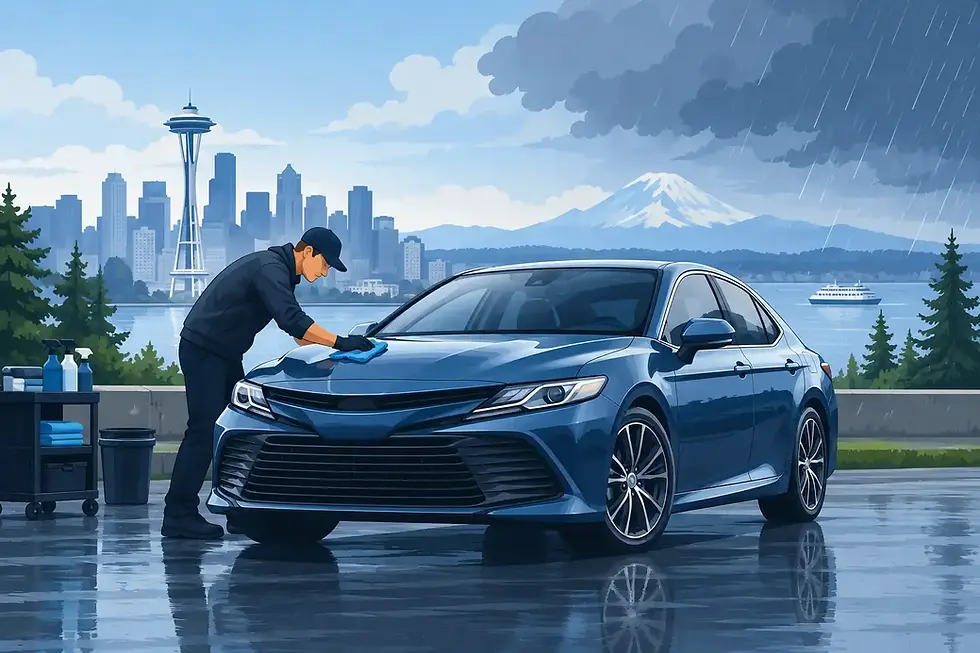
Seattle and Everett do not get desert-level sunshine year-round, but Pacific Northwest weather is not a free pass. UV still reaches your vehicle through cloud cover. Add wet roads, tree debris, mossy parking areas, salt and grime from winter driving, and long stretches between proper washes, and paint can take a beating here too.
Will Ceramic Coating Prevent Fading Completely?
No coating can promise that your paint will never fade. A ceramic coating cannot stop every UV ray, reverse clear-coat failure, or protect a vehicle that sits uncovered for years without washing. Anyone promising permanent, zero-maintenance protection is selling the sizzle without explaining the service.
What a professional-grade coating can do is create a sacrificial barrier above the clear coat. Its chemical resistance and hydrophobic properties make contaminants less likely to bond aggressively to the surface. Water beads and sheets more easily, grime is easier to remove, and the paint receives another layer of protection against the daily stuff that steals shine.
The biggest fading benefit comes from slowing oxidation. Ceramic coatings offer UV-resistant properties that help protect the clear coat from constant sun exposure. That matters most for vehicles parked outdoors at work, at home, or at trailheads and job sites where covered parking is not an option.
Ceramic coating also helps keep a vehicle looking fresher because it preserves gloss. When contamination is removed quickly and washes cause less friction, the finish is less likely to develop the dull, worn appearance people often call fading.
A Coating Cannot Fix Paint That Has Already Failed
This is where honest inspection matters. If your clear coat is peeling, cracking, or failing, ceramic coating will not repair it. The panel needs repainting. Applying a coating over failing clear coat may add temporary gloss, but it will not stop the damaged material underneath from continuing to fail.
The same goes for heavy oxidation. A coating can protect the finish after correction, but it does not magically remove dead paint or deep defects by itself. Paint correction - machine polishing that removes or reduces oxidation, swirls, haze, and defects - is usually the right step before coating a neglected vehicle.
For vehicles with moderate fading or dullness, a detailer may be able to bring back a surprising amount of clarity and color through proper decontamination and polishing. Results depend on paint thickness, the vehicle's age, prior repairs, and whether the clear coat is still healthy. That is why a real assessment beats a one-size-fits-all promise.
Ceramic Coating vs. Wax, Sealant, and Paint Protection Film
Wax and synthetic sealants can improve gloss and add short-term UV and water protection. They are useful, affordable maintenance products, but they wear away much faster than a ceramic coating. If you enjoy maintaining your vehicle every few months, wax can still be a solid part of the routine.
Ceramic coatings are built for longer-term protection and easier upkeep. They bond more durably than wax, resist chemicals better, and keep the surface slicker for longer when installed and maintained correctly. That makes them a strong choice for daily drivers, newer vehicles, black paint, and owners who want less struggle during regular washes.
Paint protection film, often called PPF, serves a different purpose. It is generally the better choice for guarding high-impact areas against rock chips, road debris, and scratches. A ceramic coating can be applied over paint protection film for easier cleaning and added gloss, but coating alone will not stop a rock from chipping a hood or bumper.
For many drivers, the practical setup is paint correction where needed, ceramic coating across the vehicle, and paint protection film on the areas that catch the most highway abuse. Your budget, driving habits, parking situation, and vehicle goals should decide the package - not a generic sales pitch.
How to Get Real Fading Protection From a Ceramic Coating
The installation process matters as much as the bottle. A coating needs clean, decontaminated paint to bond properly. Professional prep typically includes a thorough wash, chemical decontamination for embedded iron and fallout, clay treatment when appropriate, and paint correction based on the condition of the vehicle.
Skipping prep can lock contamination, haze, and swirls beneath a coating. The coating may still bead water, but it will not deliver the finish people expect when they hear words like gloss, depth, and protection. Clean paint is good. Corrected paint with a properly installed coating is where the shine really shows up.
Maintenance still counts after installation. Use pH-balanced wash products, avoid dirty automatic brush washes, and remove bird droppings, sap, bug residue, and fuel spills quickly. A coated car is easier to clean, not self-cleaning. Letting grime bake on for weeks is still a bad plan.
Parking in a garage or under cover whenever possible will always help. If outdoor parking is unavoidable, regular gentle washing and periodic coating maintenance can make a major difference over the years. The coating is doing its job best when you give it a fighting chance.
Fading on Plastic Trim Is a Different Problem
Paint is not the only surface that fades. Black plastic mirror caps, bumper trim, cowl panels, roof rails, and bed trim often turn gray from UV exposure. Standard paint coating may offer some help on certain exterior plastics, but faded trim usually needs a dedicated trim restoration or trim coating product.
Do not confuse a temporary dressing with a restoration. Many dressings make trim look dark for a few days or weeks, then wash away and leave streaky results. A proper trim restoration process cleans and prepares the material, then applies protection designed for porous exterior plastic. It is a smarter route for vehicles that have started looking weathered around otherwise healthy paint.
Is Ceramic Coating Worth It for Seattle-Area Drivers?
For a commuter vehicle, family SUV, truck, or enthusiast car that spends time outdoors, ceramic coating can absolutely be worth it. It makes routine cleanup easier, supports long-term paint condition, and helps preserve the gloss that makes a clean vehicle look properly cared for. It is especially useful after paint correction, when the finish has been brought back to its best possible condition.
The value depends on expectations. If you want permanent protection without washing, it is not the right product. If you want to reduce UV wear, oxidation, contamination damage, and wash-induced dullness while making your vehicle easier to keep clean, it is a very practical upgrade.
If your paint already looks tired, start with an honest condition check. Slide In Mobile Detailing can determine whether your vehicle needs correction before ceramic protection, or whether a simpler maintenance service makes more sense. The best protection plan is the one that matches your vehicle's current condition and how you actually use it - then keeps that shine working hard long after wash day.

Comments