


Car Detailing That Holds Up in Seattle Weather
A clean car can feel great for an afternoon. A real car detailing service should do more than that. It should remove the grit, moisture, salt film, pet hair, food spills, tree sap, and traffic grime that build up while you live your life around Seattle and Everett.
That matters here. Pacific Northwest vehicles take a beating in quiet ways: wet shoes soak floor mats, evergreen debris settles into trim, road spray clings to lower panels, and damp interiors can hold odors longer than most owners expect. A quick wash has its place, but it is not the same thing as restoring, protecting, and maintaining a vehicle properly.
What Car Detailing Actually Means
Car detailing is a methodical cleaning and reconditioning process for the interior, exterior, or both. The goal is not simply to make the vehicle look acceptable from 10 feet away. It is to address the surfaces people touch, the areas they rarely see, and the contamination that can slowly wear down paint, trim, upholstery, leather, and wheels.
The right service depends on the vehicle's condition and what you need from it. A commuter car with light dust and normal use may need an express interior refresh and exterior wash. A family SUV with muddy mats, snack crumbs, dog hair, and coffee stains needs more time and a deeper process. A black truck covered in swirls may look clean after washing, but paint correction is what can improve clarity and bring back that deep, sharp reflection.
A true detail is also not a one-size-fits-all promise. Larger SUVs, trucks, vans, and heavily used vehicles require more labor, more product, and more drying time. Transparent pricing and condition-based adjustments are not a gimmick. They are how a detailer avoids rushing the job or pretending a disaster-level interior is the same as a lightly used sedan.
Exterior Detailing: Clean Paint Is Only the Start
Exterior work begins with safely removing loose dirt and road film. That sounds basic, but technique matters. Aggressive scrubbing on dirty paint can create fresh scratches and swirls, especially on darker colors. A proper wash process focuses on lubrication, careful contact washing, wheel and tire cleaning, and attention to crevices where grime hides.
After the initial wash, the paint may need decontamination. Tree sap, bug residue, brake dust, industrial fallout, and embedded particles do not always come off with soap alone. If they remain on the surface, the paint can feel rough and look dull even after a wash.
From there, protection makes the difference between a car that looks good today and one that is easier to maintain next month. A quality sealant, wax, or ceramic coating helps water shed, makes grime less likely to bond to the surface, and adds gloss. The trade-off is simple: short-term protection costs less upfront and needs more frequent reapplication, while a professionally installed ceramic coating requires a larger investment and proper paint preparation.
Ceramic coatings are not magic force fields. They will not prevent rock chips, eliminate washing, or repair existing scratches. What they can do is provide durable chemical resistance, stronger water behavior, and a noticeably easier maintenance routine when installed on properly corrected paint.
When Paint Correction Is Worth It
If your paint has spiderweb-like swirl marks, faded gloss, light scratches, or haze from years of automatic car washes, paint correction may be the move. This is a polishing process that levels a small amount of clear coat to reduce visible defects and improve gloss.
Not every vehicle needs maximum correction. On a daily driver, a lighter polish that improves the overall finish may be the smart value. On an enthusiast vehicle or a newer car receiving ceramic protection, a more involved correction can make sense because the coating will preserve that improved finish. The best approach depends on paint condition, paint thickness, budget, and how the vehicle is used.
Interior Car Detailing Is About Health, Comfort, and Resale
The interior tells the real story of a vehicle. It holds the evidence of school drop-offs, wet hiking gear, drive-thru meals, work commutes, rideshare passengers, and every rainy-day coffee run. Vacuuming is part of interior detailing, but it is only the opening act.
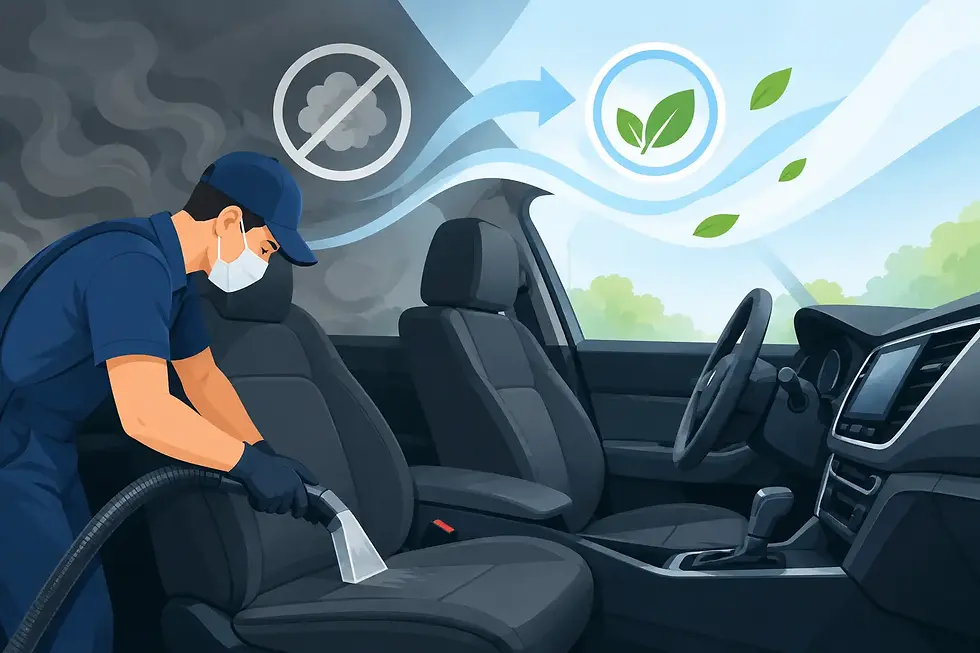
A thorough interior service can include vacuuming carpets and seats, cleaning door panels and consoles, wiping dash surfaces, treating leather or vinyl, shampooing or extracting fabric, cleaning cup holders, and restoring the glass to a streak-free finish. Floor mats deserve serious attention too, particularly in the Northwest, where moisture and grit get tracked in for months.
Odor work requires an honest diagnosis. A light lingering smell from food or pets may improve with deep cleaning and an odor treatment. Strong odors from smoke, mildew, bodily fluids, or a water leak need the source addressed first. Ozone treatments can be useful in the right situation, but ozone alone will not solve mold under carpet padding or old milk spilled beneath a rear seat.
This is where candid service matters. If mold is present, if pet hair is packed into every fabric seam, or if a vehicle needs biohazard cleanup, the detail needs to be quoted and handled at the proper level. The goal is not to make a big problem look temporarily better. The goal is to get the vehicle genuinely clean and safe to use.
How Often Should You Detail Your Vehicle?
For most daily drivers in Seattle and Everett, a full interior and exterior detail once or twice a year is a practical baseline. That schedule works well when paired with regular maintenance washes and occasional interior cleanups.
Some vehicles need attention more often. Rideshare vehicles, family vans, work trucks, dog-haulers, and cars parked under trees can benefit from quarterly service. Vehicles with ceramic coatings also need proper maintenance. The coating makes cleaning easier, but it still collects road film and contamination like every other vehicle.
Watch for the signs that your car is overdue: paint that feels rough after washing, cloudy headlights, greasy interior touch points, stained seats, persistent odors, matted pet hair, faded trim, or wheels that never seem to look clean. Waiting too long can turn a straightforward maintenance appointment into a deeper restoration job.
Mobile Detailing or Shop Service?
Mobile detailing is built for convenience. If you have access to a suitable parking area and can set aside the time, a professional can bring the service to your home or workplace. It is a solid option for maintenance details, interior cleaning, exterior reconditioning, and busy schedules that do not leave room for sitting in a waiting area.
Shop service is often the better choice for paint correction, ceramic coatings, severe odor treatments, mold removal, extensive stain extraction, or weather-sensitive work. A controlled environment gives the detailer better lighting, access to equipment, and the time needed for coatings to cure correctly.
Slide In Mobile Detailing offers both options because the best location should fit the work, not force the customer into a package that does not make sense. If you've got a hot date, a road trip, a vehicle going up for sale, or a cabin-full of dog hair that has gotten out of hand, the right detail starts with matching the service to the condition.
Get More From Every Detail
The easiest way to protect a professional result is to stop the small messes from becoming permanent ones. Remove trash weekly, blot spills quickly, shake out mats, and avoid using harsh household cleaners on leather, screens, or painted surfaces. Those products can leave residue, discolor materials, or create more work later.
For exterior maintenance, regular hand washing is gentler than letting grime bake onto the paint or relying on abrasive tunnel washes. If a bird dropping, tree sap spot, or bug residue lands on the vehicle, remove it sooner rather than later. Those contaminants can etch or stain when left in place.
A vehicle does not need to be showroom-perfect to deserve professional care. It just needs a service that matches how you use it, what it has been through, and how long you plan to keep it. Book the level of car detailing your vehicle actually needs, then enjoy the part that never gets old: opening the door to a car that feels like yours again.


Comments