


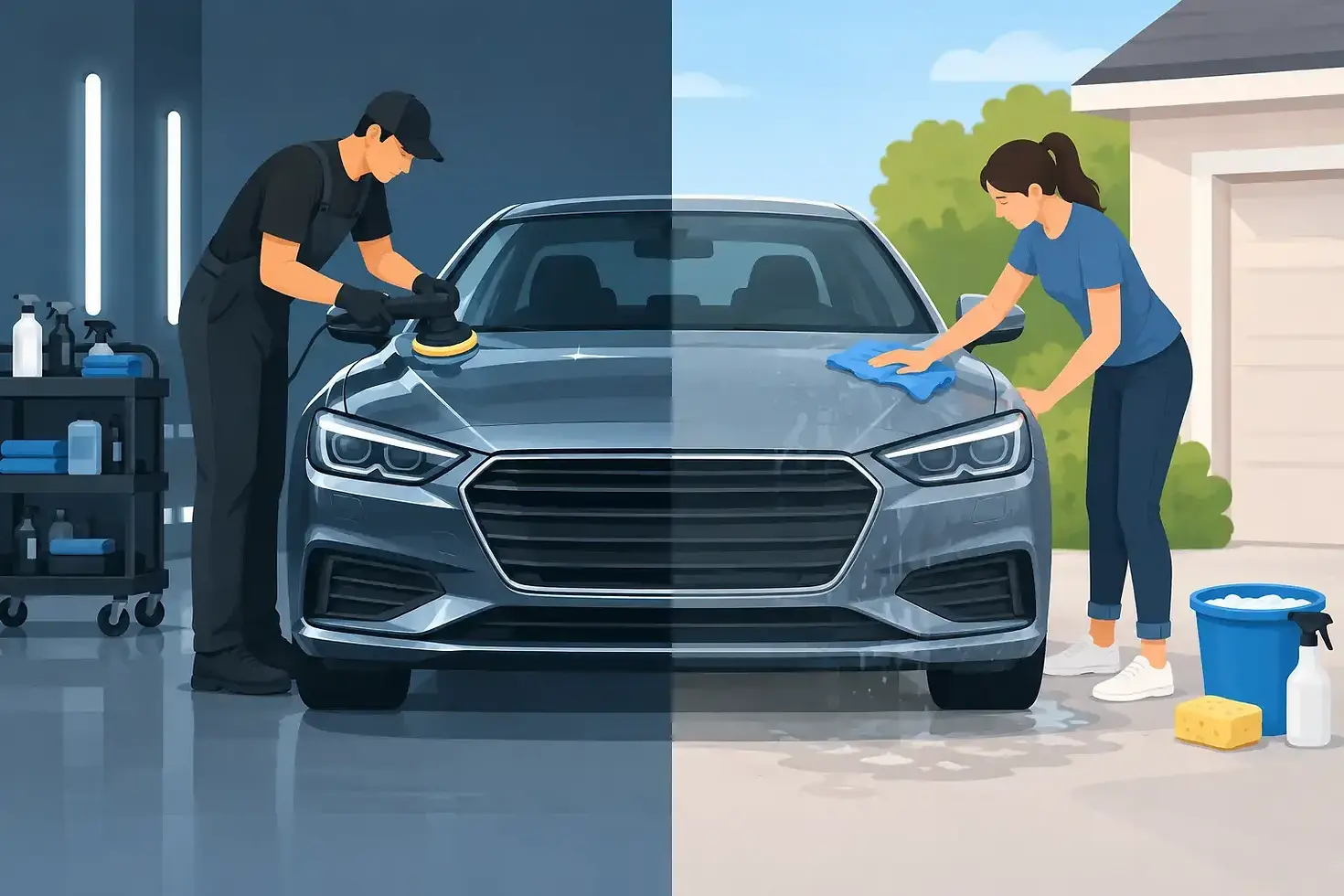
Professional Detailing Versus DIY Cleaning
A Saturday wash in the driveway can make a vehicle look better fast. But professional detailing versus DIY cleaning is not really a contest between caring and not caring. It is a question of what your car needs, what your time is worth, and whether you are dealing with ordinary dust or Pacific Northwest-level grime, dampness, sap, pet hair, and mystery smells.
For Seattle and Everett drivers, a basic home clean absolutely has a place. Keeping up with crumbs, wiping down touchpoints, vacuuming the mats, and rinsing away fresh road film can protect your vehicle between appointments. The trouble starts when a quick clean is asked to solve a deep-cleaning or paint-correction problem. A bottle of all-purpose cleaner and a vacuum are useful tools. They are not magic wands.
Professional Detailing Versus DIY Cleaning: The Real Difference
DIY cleaning is maintenance. Professional detailing is a controlled reconditioning process. The difference comes down to inspection, tools, products, time, and technique.
At home, most people clean what they can see. They vacuum the seats, wipe the dash, wash the exterior, and call it good. That is a solid routine for a vehicle that is already in decent shape. A professional detail goes further into the areas that hold contamination: seat tracks, vents, door jambs, cup holders, carpet fibers, headliners, wheel barrels, paint pores, rubber seals, and trim.
That extra work matters because dirt is rarely just dirt. Road film can bond to paint. Tree sap can harden. Brake dust can bake onto wheels. Moisture trapped under floor mats can lead to mildew odors or mold concerns. Pet hair can weave itself into carpet and upholstery like it signed a lease.
A true detail also uses the right method for the surface. Leather, matte trim, clear plastic, fabric, rubber, polished metal, and painted panels all react differently to chemicals and agitation. Using a harsh degreaser on the wrong interior surface can leave it blotchy or dry. Scrubbing paint with an old towel can add swirls that show up every time the sun hits the hood.
When DIY Cleaning Makes Perfect Sense
DIY is the smart move when your vehicle is already maintained and you can stay consistent. If you wash regularly, park under cover when possible, remove spills quickly, and vacuum before debris gets ground into the carpet, you can keep a newer or well-kept vehicle looking respectable with a modest set of supplies.
For a weekly commuter or family SUV, a simple routine is usually enough between professional appointments: remove trash, shake out mats, vacuum high-traffic areas, wipe interior touchpoints with a surface-safe cleaner, and rinse off fresh bird droppings or sap before they sit too long. In wet Seattle weather, checking underneath the mats is especially worthwhile. Damp carpet has a way of announcing itself only after the odor has moved in.
DIY also works well when the goal is function, not perfection. Maybe you are cleaning up after a road trip, getting ready to pick up clients, or making the car presentable before a hot date. You do not always need a complete detail to make the cabin feel better.
The trade-off is time. A proper hand wash, interior vacuum, and wipe-down can easily take several hours once you include setup, cleanup, and the inevitable search for the extension cord. And if your vehicle is a large truck, van, or three-row SUV, that job gets bigger quickly.
Where Home Cleaning Usually Falls Short
Most DIY results are limited by equipment and process, not effort. Consumer vacuums may not pull embedded sand, dog hair, or food debris from deep carpet. Household extractors can help with fabric stains, but too much water or poor drying can create another issue in our damp climate. A wet seat that stays wet is not a win.
Exterior work has similar limits. Automatic car washes are convenient, but their brushes can contribute to swirl marks over time. Washing with a single bucket, dirty mitt, or bath towel can drag grit across clear coat. The vehicle may look shiny in the shade, then reveal a web of scratches in direct sunlight.
Paint correction is where technique matters most. Swirl removal is not simply “polishing the car.” It involves measuring paint condition, choosing pads and compounds, managing heat, and knowing when to stop. Aggressive polishing can remove defects, but it also removes a small amount of clear coat. The right goal is meaningful improvement while preserving the paint for the long haul.
Odors and biological contamination are another line where DIY can become frustrating. Air freshener may cover a smell for a day, but it does not remove the source. Smoke, spilled milk, pet accidents, mold, and heavy food odors often require targeted cleaning, extraction, deodorizing, and sometimes ozone treatment. For biohazard conditions or visible mold, professional handling is the safer call.
What You Are Paying for With a Professional Detail
A professional detail is not just someone else doing the chores. You are paying for a planned process and a result that holds up better.
A quality service begins by looking at the vehicle honestly. Is it lightly soiled, heavily neglected, covered in pet hair, stained, or carrying an odor? Is the paint dull from contamination, or does it need correction? Clear expectations matter because a quick express clean and a complete reconditioning service are different jobs with different labor demands.
From there, a detailer can match the service to the condition. That may mean an interior reset for a family vehicle, a thorough exterior decontamination before protection, headlight restoration for cloudy lenses, or paint correction and ceramic coating for an owner who wants sharper gloss and easier maintenance. Larger SUVs, trucks, vans, and specialty vehicles naturally take more product and more time, which is why transparent vehicle-size adjustments are a good sign rather than a surprise.
The practical payoff is often bigger than the before-and-after photo. Cleaned and protected surfaces are easier to maintain. A properly treated exterior sheds dirt more easily. A refreshed interior is more pleasant for commuting, hauling kids, or rideshare work. And if you are selling or trading in, a vehicle that looks cared for can make a much stronger first impression.
Cost, Convenience, and the Honest Middle Ground
DIY looks cheaper because you buy the supplies once, but the full cost includes towels, wash tools, chemicals, a vacuum or extractor, water, time, and replacement products when the cheap stuff disappoints. It can still be a great value if you enjoy the process and maintain more than one vehicle.
Professional service costs more upfront, especially for deep interior work, correction, coatings, odor removal, or excessive-condition vehicles. Yet it can save money when it prevents avoidable damage, helps preserve resale value, or keeps a small problem from turning into a full restoration project.
Convenience matters too. A mobile appointment can make sense when your schedule is packed and the vehicle needs attention at home or work. A shop visit may be better for jobs that need controlled lighting, longer curing time, more equipment, or protection from the weather. Neither option is automatically better. The best choice depends on the service and the condition of the vehicle.
For many owners, the sweet spot is a professional reset followed by simple DIY upkeep. Have the carpet, paint, wheels, and hard-to-reach areas brought back to standard, then keep that standard going with regular light cleaning. You get the deep result without pretending every weekend needs to become a detailing marathon.
Choose Based on the Condition, Not the Calendar
If your car has light dust, a few crumbs, and fresh road grime, grab the vacuum and wash mitt. If you are seeing persistent odors, embedded pet hair, stained upholstery, cloudy headlights, rough-feeling paint, swirls, mold concerns, or contamination that returns after cleaning, it is time to bring in help.
Slide In Mobile Detailing serves Seattle, Everett, and nearby communities with mobile service and an Everett shop for the jobs that need more than a quick once-over. The right service should be clearly scoped before work begins, including any extra time required for heavy conditions.
Your vehicle does not need to be showroom-perfect every day. It just needs the right level of care before neglect becomes damage. Keep up with the little stuff, and do not wait too long to call in the professionals when the little stuff stops working.


Comments