


Paint Decontamination: When Paint Feels Rough
Your car can look clean after a wash and still feel like fine sandpaper when you run a hand across the hood. That roughness is exactly what paint decontamination is meant to address. It is not a fancy add-on for show cars. Around Seattle and Everett, it is often the difference between a vehicle that is merely washed and one that is genuinely clean, ready for polish, wax, sealant, or ceramic protection.
Rain, road spray, evergreen sap, brake dust, construction fallout, and commuter miles all leave material behind. Much of it will not come off with normal soap, even when the paint looks shiny from a few steps back. Bring Your Car's Shine Out starts with getting that bonded contamination off the surface safely.
What Is Paint Decontamination?
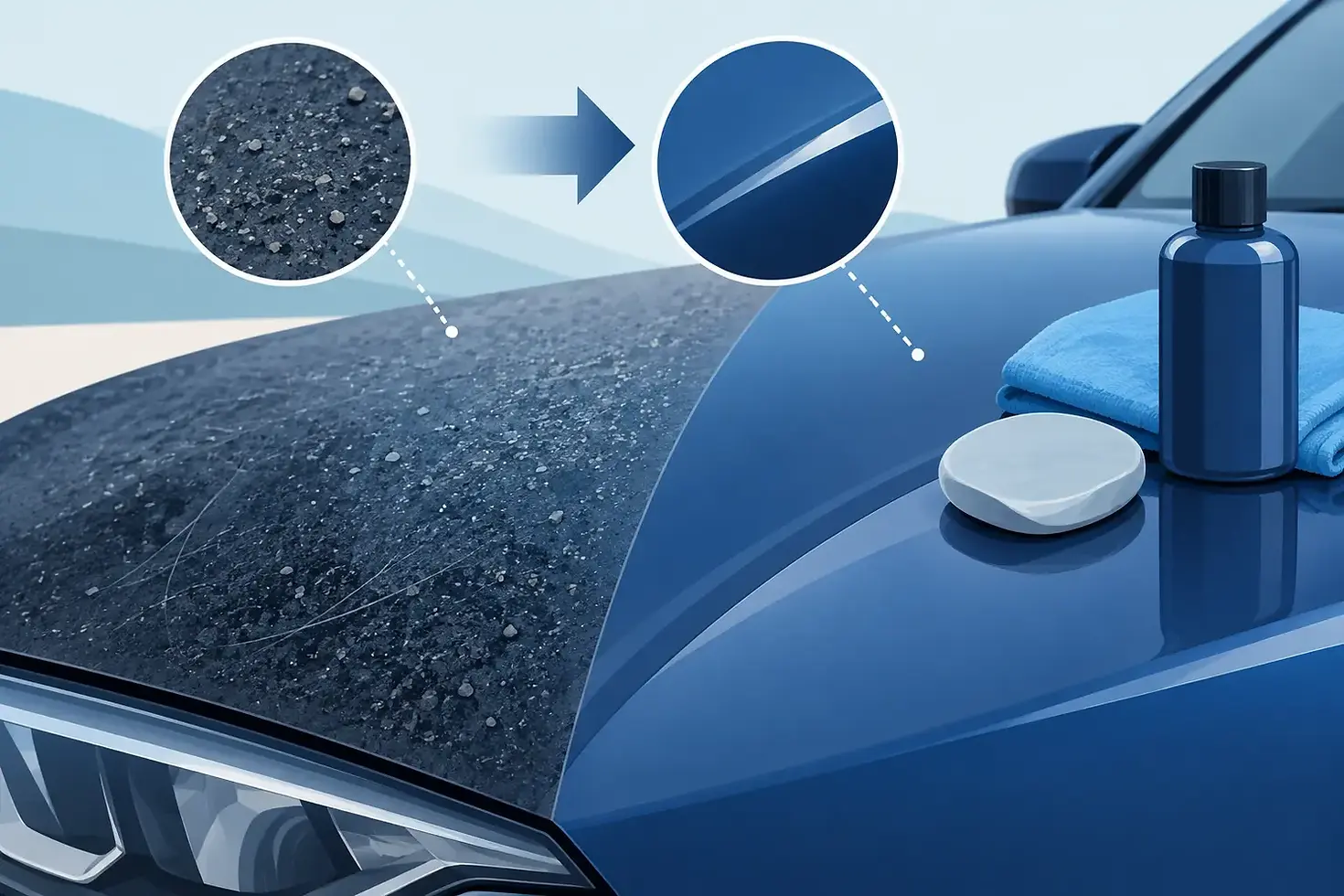
Paint decontamination is the process of removing contamination bonded to your vehicle's clear coat, glass, wheels, and other exterior surfaces. These particles sit on top of the paint or embed themselves into the clear coat. They can make the finish feel rough, reduce gloss, interfere with protection, and, over time, contribute to staining or corrosion.
A standard wash removes loose dirt, dust, and fresh road grime. It does not always remove iron particles from brake dust, tree sap residue, tar, industrial fallout, or mineral deposits. That is why a car can be freshly washed but still feel gritty.
There are two main parts of the process: chemical decontamination and mechanical decontamination. The right approach depends on the vehicle's condition, its paint type, and what comes next. A daily-driven SUV parked outside beneath trees needs a different level of work than a garage-kept weekend car headed for paint correction.
Why Pacific Northwest Vehicles Need It
The Pacific Northwest gives vehicle paint plenty to deal with. Wet roads throw grime onto lower doors and rocker panels. Rain carries airborne contaminants onto horizontal panels. Tree-lined parking spots leave sap and pollen behind, while busy roads, rail corridors, and construction activity can add fine industrial particles.
Brake dust is another frequent issue. It contains iron, and hot metallic particles can bond to painted surfaces and wheels. On light-colored vehicles, you may see tiny orange or brown specks. On dark paint, they may be harder to spot, but you can often feel them.
Tree sap deserves quick attention. Fresh sap can sometimes be removed gently during a careful wash. Once it bakes in the sun or sits through repeated weather cycles, it becomes more stubborn. Scrubbing it with a dry towel, fingernail, or household cleaner is a fast way to create scratches or dull spots.
The Difference Between Contamination and Paint Damage
Rough paint is not always damaged paint. Bonded fallout, overspray, and sap residue can make a healthy clear coat feel terrible. Once removed, the surface may feel smooth and look noticeably brighter without any polishing.
But decontamination does not fix every paint issue. Swirl marks, wash scratches, oxidation, etching, rock chips, and deep scratches are defects in or through the clear coat. Removing contamination may make those defects easier to see because the paint is cleaner and more reflective. That is not bad news. It is the honest condition of the finish finally showing through.
This is where paint correction can make sense. A light polish can improve gloss and reduce fine defects after the surface is properly cleaned. More intensive correction can remove a greater percentage of defects, but it also requires measuring paint condition, choosing the right pad and polish combination, and preserving clear coat. More aggressive is not automatically better.
How Professional Paint Decontamination Works
A proper service begins with a safe exterior wash. Loose debris needs to come off before any decontamination product or clay media touches the paint. Skipping that step risks dragging dirt across the clear coat and creating unnecessary marring.
Chemical Decontamination
Chemical decontamination targets the contaminants that do not respond to soap alone. An iron remover is commonly used on paint and wheels to dissolve ferrous particles. It often reacts with iron and changes color as it works. That reaction may look dramatic, but the goal is simple: break down bonded metallic contamination so it can be rinsed away without harsh scrubbing.
Tar removers or specialty cleaners may be used on lower panels where asphalt residue, road film, and adhesive-like grime collect. Sap and bug residue may require their own targeted treatment. The product must match the contamination, and it must be used with the right dwell time and rinsing process. Letting strong chemicals dry on a hot panel is never the plan.
Mechanical Decontamination
After the chemical stage, the paint may still have embedded particles. A clay bar, clay mitt, or synthetic decontamination towel can glide across a well-lubricated surface and pull those remaining contaminants free.
This is the stage many DIY jobs get wrong. Clay is effective, but it is not magic and it is not friction-free. Used with insufficient lubricant, too much pressure, or on a dirty panel, it can leave fine marring. On dark colors especially, that haze can be visible in direct sunlight. For vehicles receiving paint correction, that is manageable because polishing follows. For a vehicle that only needs a maintenance detail, the process should be chosen carefully to avoid creating extra work.
A quality detailer also does not treat every panel the same. Lower doors, rear bumpers, hoods, and areas behind wheels often carry heavier contamination than roof sections or protected garage-kept panels. The work should follow the condition of the vehicle, not a one-size-fits-all routine.
Signs Your Vehicle Is Due for Decontamination
The hand test is the easiest starting point. After washing and drying the vehicle, lightly run clean fingertips across the paint. If it feels gritty, bumpy, or uneven, bonded contamination is likely present. You may also notice weak water behavior, dullness that remains after washing, stubborn orange specks, tiny black dots, or residue that keeps returning around lower panels.
Before applying a ceramic coating, sealant, or wax, decontamination is especially valuable. Protection bonds and performs better on a properly prepared surface. Applying a coating over embedded fallout does not make the contamination disappear. It seals in a surface that is still rough and limits the finish you could have had.
If you are selling a vehicle, decontamination can also improve presentation. A smooth, clean finish reflects light more evenly and makes the paint look cared for. It will not hide body damage, but it helps the vehicle show honestly and sharply.
How Often Should You Decontaminate Paint?
There is no universal calendar answer. For many daily drivers in the Seattle-Everett area, a thorough decontamination once or twice a year is reasonable, especially before a major protection service. Vehicles parked outside under trees, driven long highway commutes, or exposed to job sites may need attention more often.
The trade-off is simple: decontamination is beneficial when contamination is present, but it should not be performed aggressively just because a date on the calendar arrived. Frequent safe washing and a maintained protective layer reduce how much bonded material builds up. That makes the next correction or coating appointment easier on the paint and easier on your wallet.
What to Avoid Between Detail Appointments
Avoid using a dry towel to rub off sap, dust, or bird droppings. Avoid kitchen sponges, abrasive household cleaners, and automatic tunnel brushes that can grind contamination across the clear coat. If something lands on the vehicle, gently rinse or use a dedicated exterior-safe cleaner with a clean microfiber towel as soon as practical.
Also be realistic about quick spray waxes. They can add shine and improve water behavior, but they do not remove embedded iron or make rough paint smooth. A glossy finish can still be contaminated underneath.
At Slide In Mobile Detailing, the goal is not to sell every vehicle the most aggressive package. It is to inspect what is actually on the paint, clean it correctly, and recommend the next step based on your finish, budget, and how you use the vehicle. Sometimes that means a focused decontamination before protection. Sometimes it means decontamination followed by polishing because the paint deserves more than a temporary shine.
If your paint feels rough after a wash, do not keep layering products over the problem. A careful inspection and the right prep work can bring back that slick, clean feel and give whatever protection comes next a fighting chance.


Comments