


Best Solutions for Wet Car Carpets That Work
A soaked floor mat after a rainy Seattle commute is annoying. Carpet that stays wet underneath is a bigger problem. When people search for the best solutions wet car carpets need, the real answer is not just spraying odor remover or running the heater for a day. You need to stop the water source, remove moisture from the carpet and padding, and make sure mold and odor do not get a head start.
Pacific Northwest rain, wet hiking gear, kids' sports bags, spilled drinks, leaking door seals, and clogged sunroof drains can all leave a vehicle damp. The faster you address it, the better chance you have of saving the interior without lingering smells, mildew, or electrical headaches.
The Best Solutions for Wet Car Carpets Start With the Source
Before drying anything, figure out why the carpet is wet. If the problem came from one tipped water bottle, muddy boots, or a passenger climbing in soaked from the rain, the source may be obvious. If the same area is wet every time it rains, there is likely a leak that cleaning alone will not fix.
Check whether the moisture is concentrated in one footwell, along a door sill, under the rear seats, or in the cargo area. Touch the carpet in several spots. A wet driver-side floor can point to a clogged cowl drain, a windshield seal issue, or water entering through a door. A damp passenger-side floor sometimes comes from a blocked A/C evaporator drain, especially after warm-weather driving. Wet rear carpet can be caused by door seals, rear hatch weatherstripping, or water tracking in from the front.
Pull back the floor mat and press a clean towel firmly into the carpet. If the towel comes up soaked, assume the padding below is wet too. That foam layer holds far more water than the carpet surface, which is why a car can seem dry on top but smell musty a week later.
If you see water near wiring, seat connections, fuse areas, or electronic modules, do not keep soaking it with a hose or household cleaner. Dry what you safely can and have the vehicle inspected. Modern vehicles hide a lot of electrical components under seats and carpet.
Remove the Water, Not Just the Surface Dampness
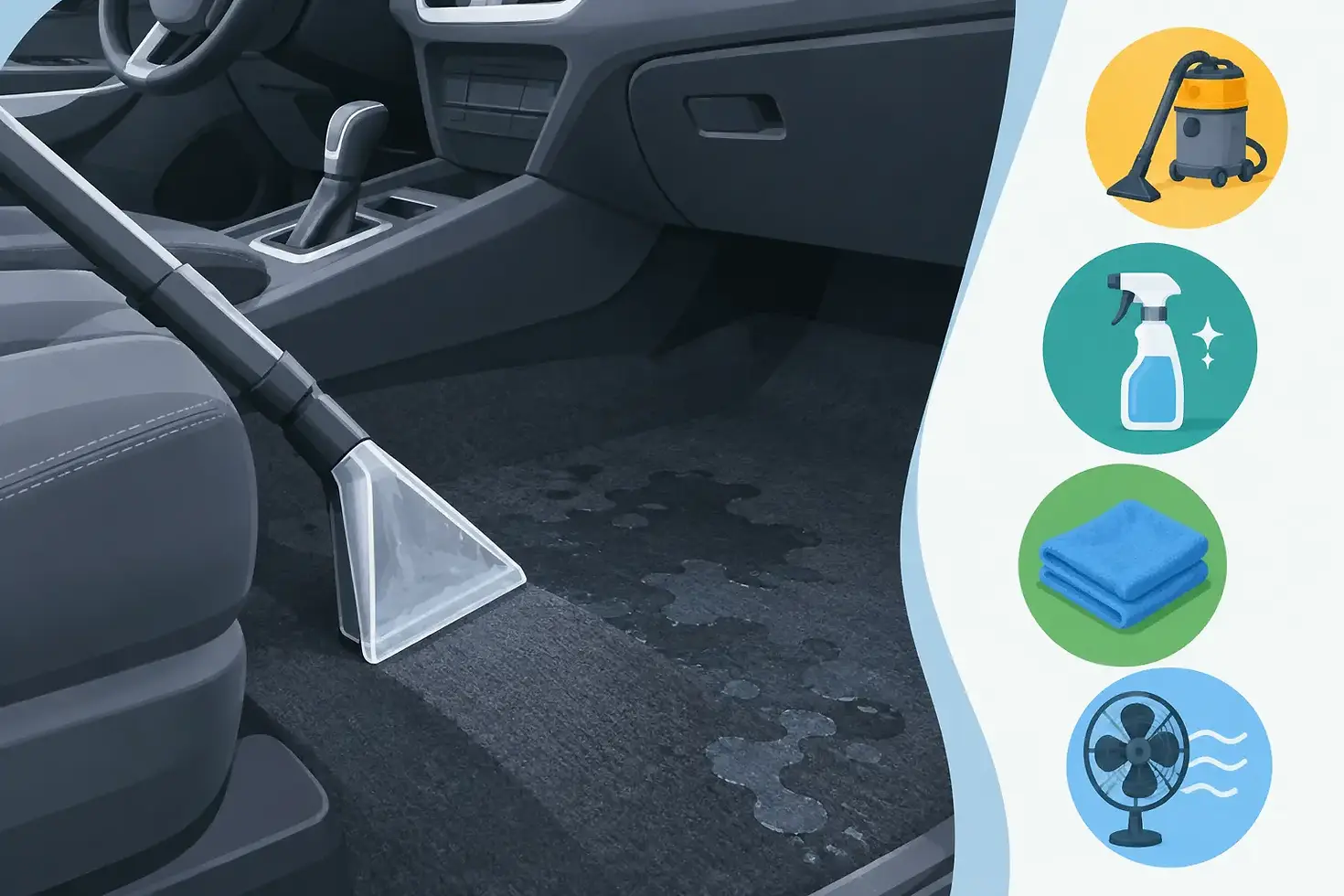
The first job is extraction. Shop towels and regular vacuuming help with surface moisture, but they will not fully pull water from carpet backing and padding. A wet/dry vacuum is useful for small spills, especially when you make slow, overlapping passes and press the vacuum nozzle down firmly.
For more than a minor spill, remove the floor mats and take them out of the vehicle. Rubber mats can be washed, wiped dry, and set aside. Carpeted mats should be extracted separately and hung where air can reach both sides. Do not place them back in the car until they are fully dry.
Then work on the vehicle carpet. Use a wet/dry vacuum or professional extractor, starting around the wettest area and moving outward. Multiple slow extraction passes are better than one quick pass. You are trying to pull moisture up from the backing, not just make the fibers look less shiny.
A common mistake is shampooing heavily before extraction. Adding lots of water and cleaner to already saturated carpet can push the problem deeper. If the spill involved coffee, pet accidents, food, or road grime, use a light amount of appropriate interior cleaner, agitate carefully, and extract it thoroughly. The goal is clean, low-moisture carpet, not a fresh layer of foam hiding in the fibers.
When the Padding Needs More Than a Vacuum
If water has soaked into the padding, extraction may not be enough. This is especially true after a leaking sunroof, a flooded floorboard, a broken window in a storm, or several days of rainwater intrusion.
In serious cases, the carpet needs to be lifted so the padding and floor pan can dry separately. On some vehicles, that means removing seats, trim pieces, center-console sections, or other interior components. It is labor-intensive work, but it is often the difference between a proper recovery and a vehicle that develops odor every time the cabin warms up.
Do not force interior panels or pull seats without knowing what is underneath. Airbag wiring, occupancy sensors, and electrical connectors can be present. A professional interior restoration service has the extraction equipment, air movement, cleaning products, and disassembly experience to deal with heavy saturation without creating new problems.
Dry It Quickly With Airflow and Dehumidification
Heat alone is not the answer. A closed car baking in the sun may feel dry on top while moisture remains trapped below. What wet carpet really needs is consistent airflow and lower humidity.
Park the vehicle in a covered, dry area if possible. Leave doors or windows open only when the weather is dry and the vehicle can be secured. Position fans so air moves across the carpet, under the seats, and toward the damp areas. A dehumidifier in an enclosed garage can make a major difference because it removes moisture from the surrounding air instead of simply moving humid air around.
If you need to use the car, run the air conditioning with the heat on and recirculation off when conditions allow. A/C helps pull moisture from cabin air. This can assist drying, but it should not replace extraction and fans when the carpet is truly wet.
Give it time, then check again. Press a dry towel into the carpet and feel beneath the edges near trim and seat rails. If it still feels cool, heavy, or damp, keep drying. Coolness often means hidden moisture remains.
Stop Odors Before They Settle In
That sour, dirty-sock smell is usually not the carpet itself. It is moisture feeding bacteria, mildew, or organic residue in the carpet backing and padding. Air freshener may cover it for an afternoon, but it cannot remove the cause.
Once the carpet is extracted, use an odor treatment that matches the contamination. A clean-water leak may only need complete drying and a light disinfecting treatment. A pet accident, spilled milk, floodwater, or food mess needs targeted cleaning before odor treatment. Using the wrong product can leave residue or make the scent combination worse.
Ozone treatment can help with stubborn odors after the source has been cleaned and the interior is dry. It is not a shortcut for wet padding or active mold. If moisture remains, the odor can return. For visible mold, widespread mustiness, or water that sat for several days, professional mold remediation is the smart move. This is not the place to spray fragrance and hope for the best.
Find the Leak Before the Next Rainstorm
Drying a vehicle once is frustrating. Drying it every week because the leak was never fixed is expensive.
Inspect door weatherstripping for tears, flattened sections, and debris. Clear leaves and pine needles from cowl areas and drain channels. Check sunroof drains if your vehicle has a sunroof, but avoid shoving wire into drain tubes, which can disconnect or puncture them. Look for loose windshield trim, damaged hatch seals, and signs of water trails behind interior panels.
If you cannot find the entry point, a controlled water test can help. Have one person sit inside with a flashlight while another lightly runs water over one section at a time. Start low and work upward. Do not blast the vehicle with a pressure washer, because that can force water through places normal rain never would.
A body shop, glass shop, or qualified repair facility may be needed for failed seals, damaged drains, rusted areas, or windshield leaks. Detailing can restore the interior after the damage, but the repair stops it from happening again.
When to Call for Professional Help
A small spill that is extracted and dried the same day is often a solid DIY job. Call a professional when water has reached the padding, the carpet smells musty, mold is visible, the vehicle was exposed to floodwater, or the leak keeps returning. The same goes for vehicles with soaked rear cargo areas, wet seat foam, or moisture around electronics.
At Slide In Mobile Detailing, heavy interior recovery is treated like a real restoration job, not a quick vacuum-and-shine service. Proper extraction, interior cleaning, odor treatment, and clear expectations about excessive conditions matter when your vehicle has been fighting Pacific Northwest moisture.
Your car should not smell like last month's rainstorm. Get the water out, give the interior enough airflow to dry all the way through, and fix the entry point before the next downpour turns a damp floor mat into a bigger repair.


Comments