


Leather Seat Cleaning That Preserves the Finish
That shiny, dark patch on the driver’s seat is not a sign that the leather is healthy. It is usually a buildup of body oil, hand lotion, sunscreen, denim transfer, and road-life grime pressed into the surface every time you get behind the wheel. Proper leather seat cleaning removes that buildup without stripping the finish or leaving the seats slick, greasy, or overly dry.
For Seattle and Everett drivers, leather interiors take a beating in quiet ways. Rainy jackets, damp dogs, coffee runs, kids’ snacks, rideshare passengers, and long commutes all add contamination. Catch it early and leather cleaning is straightforward. Let it sit for months or years, and a simple cleanup can turn into stain correction, odor treatment, or dye repair.
What You Are Actually Cleaning
Most automotive leather is not bare, untreated hide. Modern vehicle seats typically have a protective top coating that gives them their color, sheen, and resistance to everyday spills. That means the goal is usually to clean the coated surface safely, not soak the leather with heavy conditioners.
This is why a seat can feel stiff or look shiny even when someone has been applying leather conditioner regularly. If oil and dirt are still sitting on top, adding more product only makes the problem worse. A clean leather seat should look natural and feel grippy, not glossy like a freshly dressed tire.
There are exceptions. Older classics, certain luxury vehicles, and specialty interiors may use more delicate leather types. Perforated, ventilated, heated, or cooled seats also need extra care because liquid pushed into the holes can reach foam, wiring, or seat components. When the material is unusual or the seat already shows cracking, peeling, or color loss, it pays to slow down before grabbing a cleaner.
Leather Seat Cleaning Starts With Inspection
Before applying anything, inspect the high-contact areas: the outside driver bolster, steering-side edge of the seat bottom, armrests, headrests, and rear seats where car seats or pets ride. Look for blue-gray denim transfer, sunscreen haze, oily shine, food residue, pet dander, salt rings, and cracks in the coating.
A little cracking changes the game. Cleaning can remove the dirt settled into the creases, but it cannot replace missing color or rebuild worn coating. Aggressive scrubbing on damaged leather may make that wear more visible. The right approach is to clean gently, dry the surface completely, then decide whether the seat needs protection, conditioning, or professional repair.
Vacuuming comes first. Sand, crumbs, pet hair, and grit collect in the seams and can act like sandpaper when rubbed across the seat. Use a soft brush attachment and work through the stitching, around seat controls, and between the seat bottom and backrest. If the vehicle has ventilated seats, keep suction and moisture controlled around the perforations.
The Safe Process for Leather Seat Cleaning
The best results come from light, repeated passes instead of one heavy chemical attack. Work one small section at a time so cleaner does not dry on the surface.
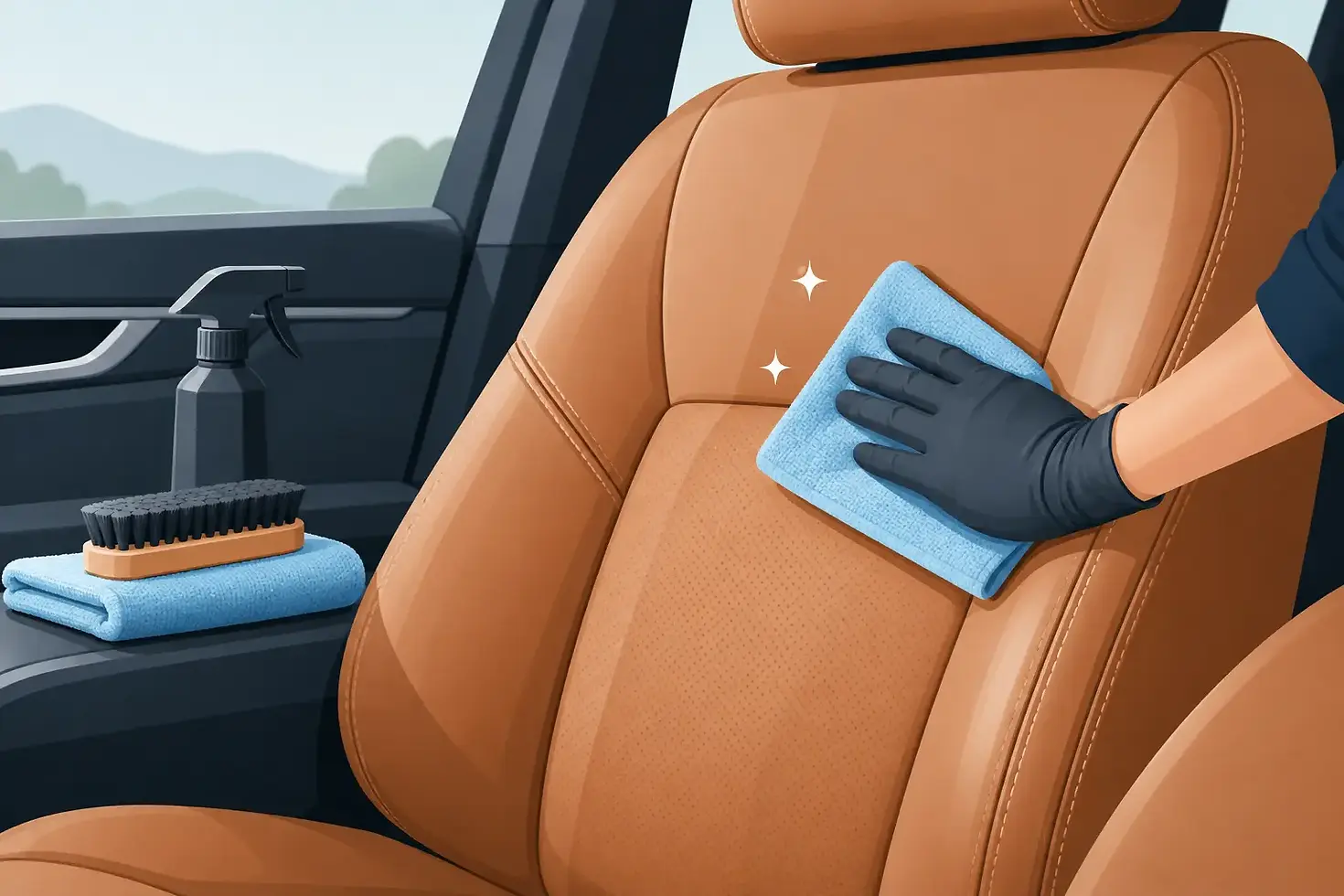
Start by applying a dedicated leather cleaner to a microfiber towel or a soft interior brush, rather than spraying it directly across the seat. This gives you control, especially near perforations, stitching, buttons, and electronic seat controls. Gently agitate the surface with light pressure. The brush should lift grime from the grain, not scour the finish.
Immediately wipe the area with a clean microfiber towel. Flip to a fresh side often. A towel that is already loaded with grime will simply spread contamination back across the leather. On heavy-use driver seats, it may take several gentle rounds before the towel stops pulling brown or gray residue.
For tight seams and textured grain, a soft detailing brush can help, but patience matters more than force. If a stain does not move after a few careful passes, do not keep grinding away at it. It may be dye transfer, damaged coating, or discoloration below the surface. That is the point where a professional evaluation can save the seat from a bad DIY fix.
Once the leather is clean, dry it with a fresh towel and let it air out before applying any protectant. If the seats feel dry, choose a water-based leather protectant or conditioner made for automotive coated leather. Use a thin, even layer. More product does not mean more protection, and greasy residue can attract dust, make seats slippery, and transfer onto clothing.
Pay Attention to Perforated and Ventilated Seats
Perforated leather needs a low-moisture approach. Do not flood the surface, saturate a brush, or spray cleaner directly into the holes. Cleaner trapped in the padding can create lingering moisture, odors, or issues around ventilated-seat systems.
Use a lightly damp microfiber towel, small amounts of cleaner, and short passes. Follow with a dry towel right away. If spills have reached inside the perforations or there is a persistent sour smell, surface cleaning alone may not be enough. The interior may need targeted extraction, odor treatment, or careful drying beyond what a quick wipe-down can handle.
What Not to Use on Leather Seats
Household cleaners are tempting because they are already under the sink, but they are a gamble on automotive interiors. Strong degreasers, bleach-based products, abrasive scrub pads, glass cleaner, and disinfecting wipes can dry out or dull the coating. They can also leave streaks and make worn areas stand out.
Avoid oily dressings that promise a wet, showroom shine. That shine often hides contamination for a few days, then turns into a dust magnet. It can also make the seat feel slick when you are cornering, braking, or climbing into a tall truck or SUV. Leather should look clean and cared for, not artificially coated.
Magic-eraser style abrasive pads deserve special caution. They can remove stubborn transfer marks, but they can also remove color and protective coating if used too aggressively. The same goes for stiff brushes. The fact that a product works fast does not mean it is the right tool for the material.
How Often Should Leather Seats Be Cleaned?
For a daily driver, a light leather cleaning every two to three months is a solid maintenance rhythm. Vehicles with kids, pets, rideshare passengers, work gear, or regular outdoor use may need attention monthly. The driver’s seat and steering wheel usually need more frequent care than the rear seats.
Season matters in the Pacific Northwest. During wet months, moisture and grime are carried in on jackets, shoes, umbrellas, and dogs. Summer brings sunscreen, sweat, and sticky drinks. A quick wipe after a spill is always easier than trying to remove a baked-in mark during the next full detail.
Protection is useful, but it is not a substitute for cleaning. A quality protectant can make future soil easier to remove and reduce dye transfer, yet it cannot stop body oil and dirt from collecting forever. Think of it like wax on paint: it helps, but regular washing still matters.
When a Professional Detail Makes More Sense
Some leather seats need more than a maintenance clean. Dark, glossy driver bolsters, deep denim transfer, embedded pet hair in seams, milk or coffee spills, mildew smells, and mystery stains are all good reasons to bring in an experienced detailer. The same applies when a vehicle is being prepared for sale, lease return, or a first date after the interior has been living a little too hard.
A proper interior detail addresses the surrounding problem areas too. Leather seats can be cleaned perfectly, but the result falls flat if the carpets are stained, the door panels are grimy, and the cabin still smells damp. Slide In Mobile Detailing can handle leather cleaning as part of a structured interior service, whether the vehicle needs mobile convenience or a deeper appointment at the Everett shop.
If your seat feels slick, looks darker where you sit, or leaves residue on a white microfiber towel, do not wait for the damage to become permanent. A careful cleaning now keeps the leather looking like a seat you want to slide into, not one you have been trying not to touch.


Comments